Problem
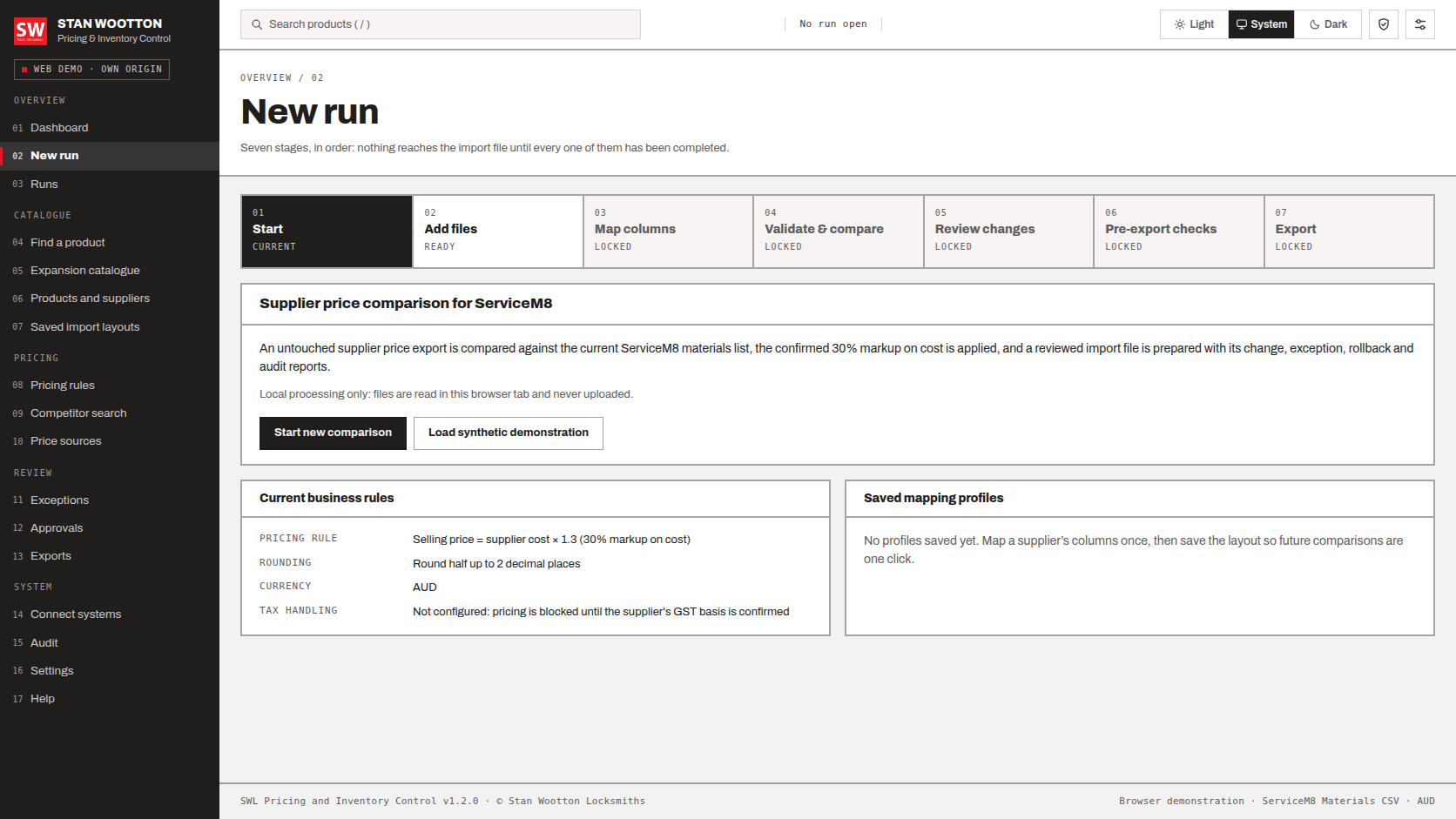
Stan Wootton Locksmiths reprices its ServiceM8 materials catalogue from supplier price exports. Doing that by spreadsheet risks damaged item numbers and barcodes, an inconsistent markup and unreviewed price changes reaching the job system.
System boundary
A local-first pricing and inventory control application with a Windows desktop surface and a browser surface. It compares an untouched supplier export against the current ServiceM8 materials list, applies the confirmed 30 percent markup on GST-exclusive cost, and produces an operator-reviewed import CSV in ServiceM8's exact format, with change, exception, rollback and audit reports.
Architecture
A shared React and TypeScript interface over pure domain modules for money, pricing, comparison, mapping and output. A typed platform adapter selects the backend: scoped Tauri commands with bundled SQLite on the Rust desktop build, a loopback Node server for local web use, and a session-only store for the static demonstration.
Constraints and decisions
- 01Matching is deterministic and fail-closed: exact normalised code, then operator-approved alias, then description similarity as a suggestion only. Items missing from a supplier file are never deleted, and money is never binary floating point.
- 02Imported business rows stay in memory and are never persisted; repository checks and CI enforce a no-production-data and no-secrets rule on every change.
Verification
More than 500 automated checks: Vitest unit and property-based tests, Playwright browser tests with axe accessibility runs, WebdriverIO tests against the installed desktop app and Rust unit tests, including a byte-for-byte round trip of the ServiceM8 CSV contract. Typecheck, lint, tests and packaging run in CI.
Current readiness
Release 1.2.0 builds an unsigned Windows installer and a browser demonstration through CI. Production installation, code signing and automatic updates sit outside the current release boundary and are tracked in the repository's gap register.
Evidence boundary
This record does not claim a completed production rollout, live supplier or accounting integrations in use, or outcomes beyond what the public repository shows. The software is proprietary to the client.